
Sécurité du disque
Cutting wheels operate at high rotational speeds. Poorly manufactured or damaged wheels can create serious hazards. Correct wheel selection, machine compatibility, operating speed and safe handling are essential.
Disques à tronçonner T41 à liant résinoïde pour la fabrication métallique, les structures acier, les chantiers navals, les fonderies et la maintenance industrielle en Asie du Sud-Est.
Metal cutting looks simple from the outside: install a disc on an angle grinder, start the machine and cut the workpiece. In a production environment, however, the cutting wheel becomes part of a much larger process. Cutting speed, wheel wear, heat generation, operator control, edge condition, changeover frequency and machine compatibility can all affect the actual cost of every cut.
This is why choosing a metal cut off wheel should not be based only on the lowest price per piece. A suitable cutting disc for grinder applications must be matched to the wheel diameter, thickness, operating speed, workpiece material and cutting conditions.
FUJI Grinding Wheel provides resin-bonded abrasive solutions for these requirements, from compact 4-inch cutting discs for general fabrication to heavy-duty cut-off wheels for shipyards, steel structures and foundry work.
The product range is designed around common handheld grinder and industrial cutting applications, with particular attention to practical productivity, wheel stability and total consumable cost.
Procurement teams often compare abrasive products by unit price. Workshop supervisors see the problem differently: how many cuts can be completed, how often the operator must change wheels, how much rework is required, and whether performance remains consistent from one batch to the next.
Cutting wheels operate at high rotational speeds. Poorly manufactured or damaged wheels can create serious hazards. Correct wheel selection, machine compatibility, operating speed and safe handling are essential.
A wheel that cuts quickly in one batch but wears rapidly in the next creates unpredictable production costs. Industrial buyers need repeatable manufacturing parameters and quality control.
Stainless steel and other difficult materials can generate significant heat during dry cutting. Excessive heat may contribute to discoloration, burr formation and additional finishing work.
Never use a cutting wheel that is cracked, damaged, improperly mounted or rated below the grinder's operating speed. Always follow the wheel marking, grinder manufacturer's instructions and applicable workplace safety requirements.
FUJI Grinding Wheel has more than seven decades of experience focused on abrasive wheel manufacturing. The company has built its product philosophy around resin-bonded abrasive technology, manufacturing discipline and application-oriented product development.
For buyers interested in Japanese industrial tools, the FUJI approach combines Héritage industriel japonais with products designed for practical international applications.
In Japanese industrial terminology, buyers may encounter terms such as , and . For stainless applications, is commonly used, while refers to metalworking applications.
Our technical article explains the difference between hot press and cold press grinding wheel manufacturing and why manufacturing conditions influence abrasive wheel performance.
The correct abrasive depends on the job. A thin disc optimized for handheld fabrication should not be treated as a substitute for a heavy-duty wheel designed for thick steel sections. The following product families cover three important operating categories.
| Product | Dimensions | Construction / Features | Typical Applications | Positioning |
|---|---|---|---|---|
| Super Tsurugi |
105 × 1.0 mm 115 × 1.2 mm |
Thin T41 cutting wheel with double reinforced fiberglass construction. | General fabrication, sheet metal, pipes, angle steel and stainless steel work. | Affordable, fast and versatile. |
| Raicho Gold |
180 × 2.6 mm | Heavy-duty double reinforced construction designed for demanding cutting conditions. | Shipyards, steel structures, foundries, thick-wall pipe, casting risers. | Heavy-duty, long-lasting workhorse. |
| Hakusan |
305 / 355 / 405 / 455 x 2.8 / 3.0 mm |
WA36N white aluminum oxide formulation for stationary dry-cut applications. | Industrial cutoff machines, steel profiles, pipes and stainless steel. | Stationary industrial cutting. |
Standard B2B quantities and pricing depend on specification, packaging, order volume and application. Custom dimensions and formulations can be discussed for qualified industrial orders.
The Super Tsurugi series is designed for users who need an economical and practical grinder cutting disc for everyday metal fabrication. The 105 × 1.0 mm version is particularly relevant to Southeast Asian markets where compact handheld angle grinders are widely used.
When cutting large steel sections, the wheel is subjected to considerably greater mechanical and thermal demands. The Raicho Gold 180 × 2.6 mm is designed for heavy industrial applications where durability, stability and fewer wheel changes are important.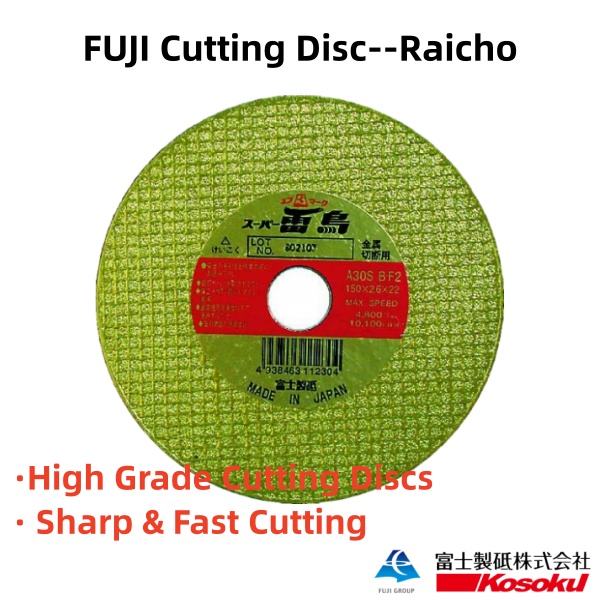
Typical applications include steel structure fabrication, shipbuilding, marine equipment, foundries, casting sprue and riser cutting, and thick-wall pipe.
Its reinforced structure is designed to improve resistance to lateral twisting and impact during demanding cutting operations. Internal application testing supplied in the product materials indicates that the wheel can provide a substantial productivity improvement in suitable heavy-section applications. Actual results depend on material, operator technique, machine power and cutting conditions.
See the Raicho heavy-duty cutting wheel for detailed product information.
Handheld angle grinders are not suitable for every cutting operation. Large production workshops often use stationary dry cutoff machines for pipes, profiles, bars and other repeatable cutting work.
The Hakusan series covers 305, 355, 405 and 455 mm diameters with 2.8 or 3.0 mm thickness options. Selected formulations use WA36N white aluminum oxide abrasive grain for controlled cutting of metal sections, including stainless steel applications.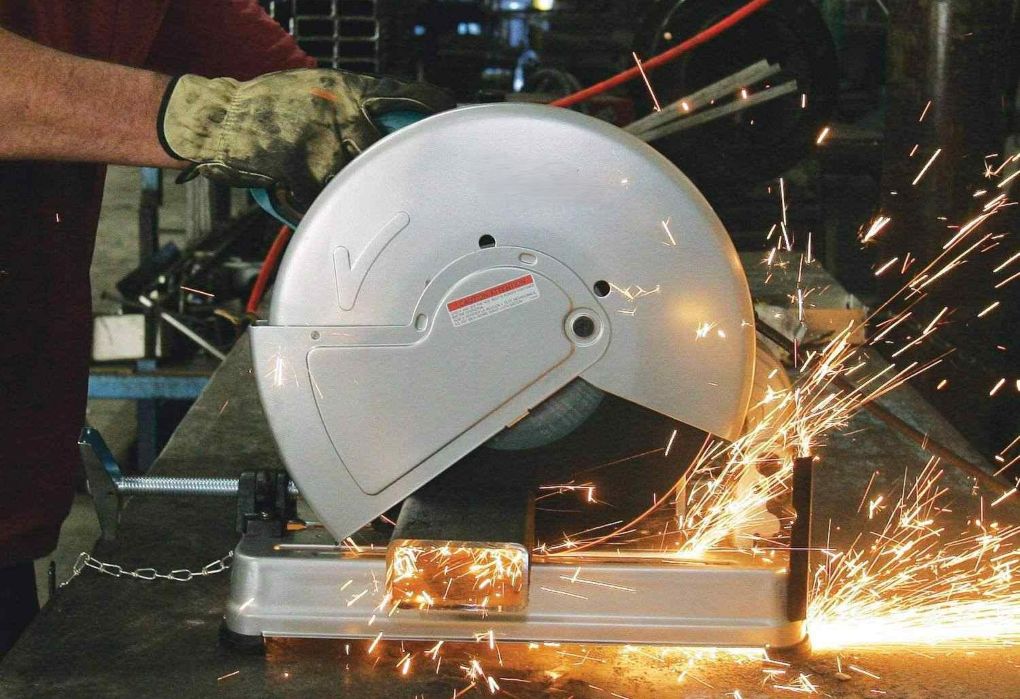
For production teams concerned about heat, discoloration and secondary finishing, choosing the correct abrasive formulation and machine parameters can help reduce unnecessary rework.
Explore the FUJI metal cutter cut off wheel range for stationary machine applications.
A professional cutting disc is not simply abrasive powder pressed into a circle. Its performance depends on the interaction between abrasive grain, resin bond, reinforcing fiberglass, wheel density, curing conditions and dimensional accuracy.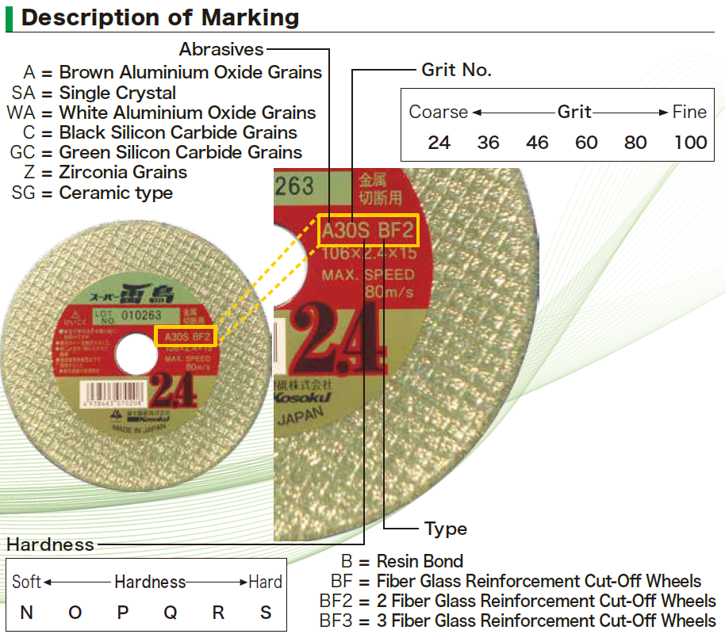
Determines cutting behavior and interaction with the workpiece.
Holds abrasive particles together and controls wheel strength and wear behavior.
Supports the wheel structure during high-speed rotational operation.
Manufacturing conditions influence density, bond strength and consistency.
FUJI uses mature hot-press manufacturing technology for selected resin-bonded abrasive products. Controlled heat and pressure during curing can help create a dense and uniform abrasive structure with stable bonding characteristics.
This manufacturing approach is one reason abrasive wheel production should be evaluated as a complete process, rather than by looking only at abrasive grain type or wheel thickness.
For a more detailed explanation of abrasive grain, grit, hardness, structure and bond terminology, read the complete guide to FUJI grinding wheel specifications .
Product specifications are important, but industrial buyers also want to understand how a wheel behaves outside a laboratory. For this reason, FUJI provides application footage from Southeast Asian industrial environments.
This field video shows a FUJI Super Tsurugi cutting disc compared with a local cutting disc under shipyard conditions in Indonesia.
Field comparison: FUJI Super Tsurugi at an Indonesian shipyard.
The second application video demonstrates a heavy-duty FUJI cutting wheel in a Philippine shipyard environment. It is particularly useful for buyers evaluating large steel sections and continuous industrial cutting.
Industrial application footage from a Philippine shipyard.
Cutting speed and wheel life are influenced by material grade, thickness, machine power, spindle speed, operator technique, cutting pressure and environmental conditions. Field videos should be treated as application evidence rather than a universal guarantee of performance.
One of the most important safety principles for any abrasive cut-off wheel is correct speed matching. The maximum operating speed marked on the wheel must never be exceeded.
Diameter alone is not enough. Buyers should verify the wheel's maximum RPM, peripheral speed, grinder rating, bore size, wheel condition and application before use.
| Check | À vérifier |
|---|---|
| Diamètre du disque | Confirm the grinder accepts the selected wheel diameter. |
| Régime maximal | Grinder operating speed must not exceed the wheel's marked maximum speed. |
| Type de disque | Use a cutting wheel for cutting. Do not use a flat cut off wheel for side grinding. |
| Matériau | Select the appropriate formulation for carbon steel, stainless steel or the intended workpiece. |
| État | Do not use wheels that are cracked, damaged, wet or improperly stored. |
Use our grinding wheel speed and RPM conversion guide for a more detailed wheel-speed reference.
The information on this page does not replace the operating instructions supplied with the angle grinder or abrasive wheel. Always follow the actual wheel label, machine manual and applicable local safety requirements.
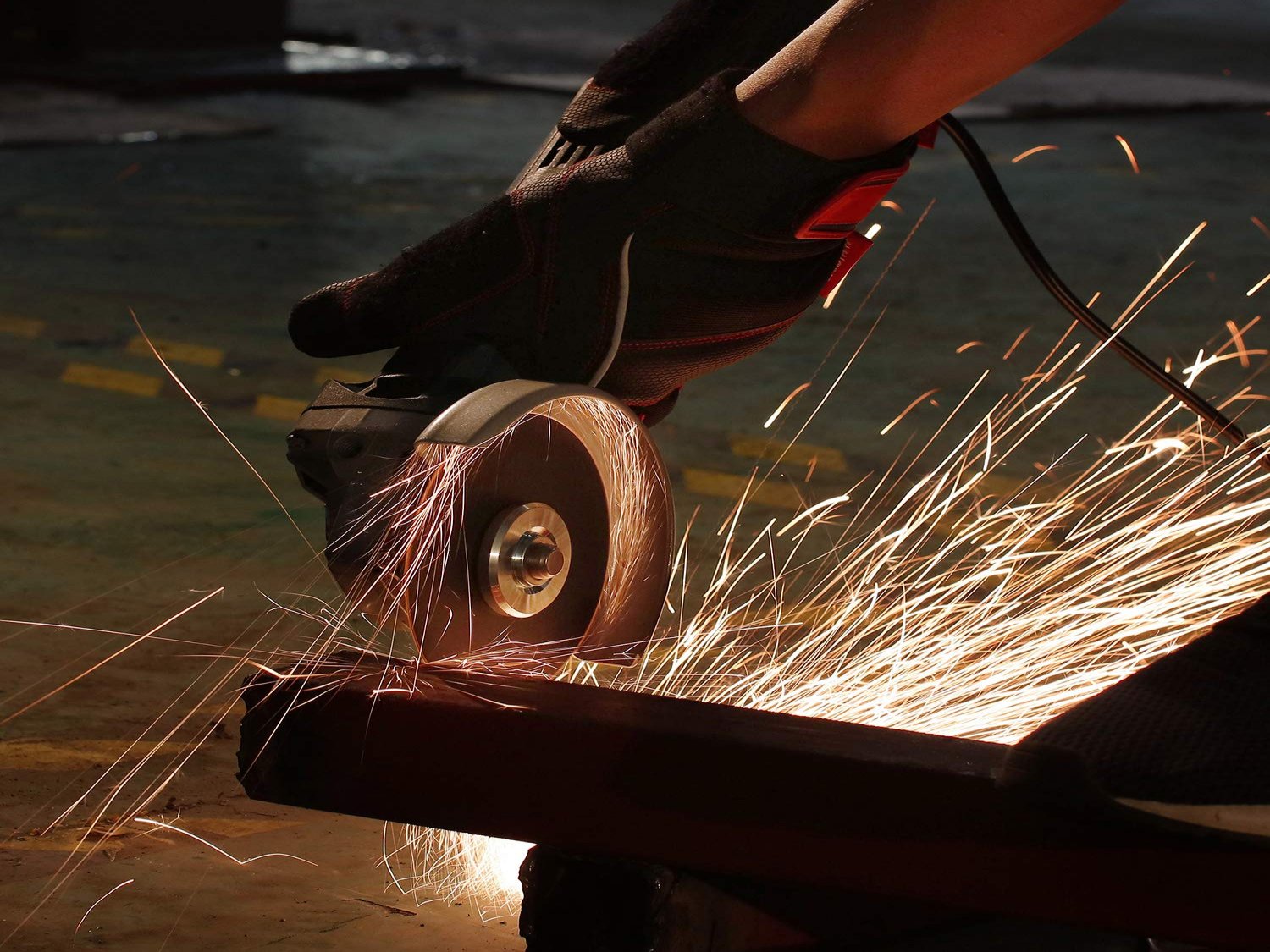
4-inch and 4.5-inch cutting discs are suited to everyday fabrication tasks including angle steel, sheet metal, pipes, threaded rods, frames and general workshop cutting.
Selected FUJI formulations are designed for stainless steel applications where controlled cutting and reduced post-processing are important.
Cutting wheels are used for support plates, temporary welding fixtures, lifting lugs, piping and steel fabrication in marine environments.
Heavy-duty cutting wheels can be used for casting sprues, risers, flash and large sections that require robust abrasive performance.
Structural steel plants can use heavy-duty cutting wheels for profiles, beams, pipes, plates and preparation work.
Compact cutting discs are practical for maintenance teams working on piping, brackets, frames, machinery and repair tasks.
In most fabrication processes, cutting is followed by deburring, edge preparation, weld cleanup or surface finishing. Purchasing cutting and grinding abrasives from different suppliers can create additional procurement complexity.
FUJI also supplies resin-bonded grinding and polishing products for carbon steel, stainless steel and other metalworking applications.
Explore the FUJI grinding and polishing wheel collection to build a more complete abrasive solution.
Learn how abrasive grain, grit, hardness, structure and bond information are represented in grinding wheel specifications.
Read the wheel specification guide →Understand how manufacturing methods can affect wheel density, bond characteristics and consistency.
Read the manufacturing comparison →Review the relationship between major abrasive wheel safety standards and speed requirements.
Compare grinding wheel safety standards →FUJI's cutting wheel program is designed for industrial buyers rather than one-off consumer purchases. Manufacturers, metalworking groups, distributors, importers and regional industrial tool suppliers can discuss volume requirements directly with the FUJI team.
Discuss diameter, thickness, bore, abrasive formulation and application requirements for volume production.
Suitable B2B partners can discuss customized product identification, packaging and private label programs.
Industrial abrasive distributors in Southeast Asia can discuss regional cooperation and product positioning.
The featured program uses a standard MOQ of approximately 5,000 pieces. Final quantities, pricing and specifications depend on the selected model and customization requirements.
Learn more about partnering with a Japanese industrial abrasives manufacturer .
A T41 cut off wheel is a flat abrasive cutting disc designed primarily for cutting metal and other compatible materials. It is commonly used with suitable angle grinders and cutoff machines. There are also other shape of cutting discs, like the depressed center cut-ff wheel.
Selected FUJI cutting disc formulations are designed for both carbon steel and stainless steel applications. Always check the individual wheel specification and application recommendation before use.
The Super Tsurugi 105 × 1.0 mm is designed for compact 4-inch handheld angle grinder applications commonly found in Southeast Asian fabrication workshops.
The Raicho Gold 180 × 2.6 mm is designed for heavy-duty applications such as steel structures, shipbuilding, foundries and thick-wall pipe cutting.
The standard MOQ for the featured B2B cutting wheel program is 5,000 pieces. Custom products may require different quantities depending on production requirements.
Yes. FUJI supports industrial customization for selected dimensions, thicknesses, abrasive formulations, packaging and application requirements.
Use the wheel's own maximum speed marking together with the grinder manufacturer's specifications. FUJI also provides an angle grinder RPM and wheel-speed guide for technical reference.
The best cutting disc for metalworking is not necessarily the cheapest wheel in the box. The right choice depends on the material, section size, machine, operating speed, required cutting rate, expected wheel life and the amount of finishing required afterward.
For general Southeast Asian fabrication work, the Super Tsurugi provides a practical thin-disc solution. For heavy steel, shipbuilding and foundry applications, Raicho Gold provides a more robust heavy-duty option. For stationary industrial cutting machines, the Hakusan range extends the solution to larger wheel diameters.
For industrial users seeking Japanese abrasive technology, FUJI combines decades of specialized manufacturing experience with application-focused resin-bonded cutting wheel solutions.
Abrasive wheels are safety-critical rotating products. Always inspect the wheel before use, install it according to the manufacturer's instructions, use appropriate personal protective equipment, and never exceed the maximum operating speed marked on the wheel. Product suitability must be confirmed for the actual machine and workpiece.
Tell us your grinder size, material, wheel dimensions, monthly consumption and target market. Our team can recommend suitable FUJI cutting wheel options and discuss B2B, OEM and regional distribution requirements.